
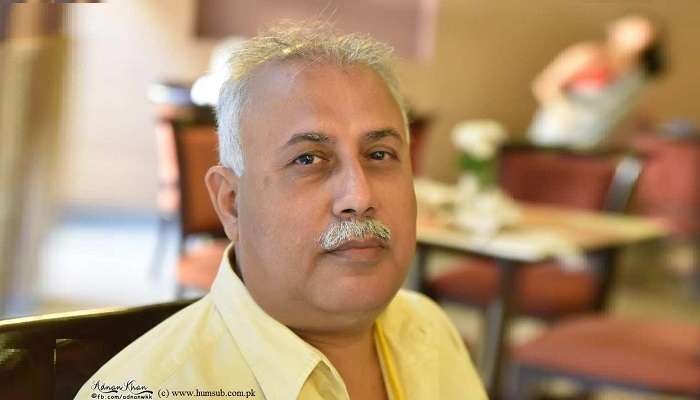
Generations pay for a slap. Gender-based violence is not just a private matter of two people but also affects the surrounding environment and relationships. It can lead to persistent nervous tension and subsequent psychological complications, disturbances in eating and sleeping habits, constant physical stress, pain in the head or other parts of the body, blood pressure and diabetes problems. All these are passed on to the next generation: Wusat Ullah Khan – Translated from Urdu.
November 25 is observed as the annual International Day for the Elimination of Violence against Women by the United Nations. There are many incidents of violence against women.
Many incidents remain hidden due to stigma, shame, resentment or pressure. Violence against women is not just beating, rape, a marriage of choice, suspicion or honor killing. Instead, its definition is extensive.
The definition of gender-based violence includes many legal and moral crimes and abuses, including mutilation in the name of custom or punishment, physical slavery or human trafficking for prostitution, abortion or termination of pregnancy based on sexual discrimination, forced marriage of young girls, sexual harassment, using insulting words or touching the body while walking, silent stalking, cyber harassment and blackmailing, and female circumcision.
According to the definition set by the United Nations General Assembly in 1993, after a detailed discussion on this issue, “any act of gender-based violence that results in, or is likely to result in, physical, sexual or psychological harm or suffering to women, including threats of such acts, coercion or arbitrary deprivation of liberty, whether occurring in public or in private life.” and cause to limit or restrict the fundamental human freedoms and rights established in private and public life. It is called gender violence.
The impact of all these forms of violence is felt at every stage of life. It acts as a barrier to the natural development of human potential.
For example, suppose girls are prevented from getting primary education due to restricting this fundamental right. In that case, the doors of access to higher education and the material, social and family fruits of this education are automatically closed. The deprivation of one fundamental right causes the denial of several rights.
Although anyone can be a victim of any form of gender-based violence anywhere at any time. But most of its target women are teenagers, homemakers, weak or mentally and physically challenged, refugees or women with alternative sexual orientations. Gender-based violence is one of the main obstacles to building an equitable and developed society. Therefore, every individual and state must be aware and proactive about their duties to discourage this trend.
According to UN Secretary-General Antonio Guterres, a girl or a woman is killed by an acquaintance or a relative every eleven minutes in this world.
The World Health Organization (WHO) concluded in the light of a detailed review conducted in one hundred and sixty-one countries in the period from 2000 to 2008 that one out of every three 15 to 50-year-old women experiences physical or sexual violence at the hands of her partner or husband at least once in her life.
There is no difference between developed and developing countries or societies. Twenty-two percent of women in America and Europe and twenty-five to thirty-three percent of women in other regions have been subjected to physical violence by their relatives, especially partners or husbands.
Thirty-eight percent of women murdered are at the hands of their husbands or partners. Only six percent of women are sexually assaulted by a stranger.
There are several reasons why this trend is not decreasing. Like illiteracy of the abuser, the victim, or any of the two. Or any personal experience of witnessing or being a victim of abuse as a child, personality disorder, alcohol or drug addiction, experience of being unaccountable for any act of violence, inappropriate masculinity or gender identity. The desire to show or show superiority, the social thinking that gives a superior status to men and inferior to women, the economic inferiority of women or insufficient or poor legislation against gender violence at the state level or its incomplete implementation, etc.
Gender-based violence is not just an incident; many complications arise from this one incident. The resulting depression, frustration or anger can take any serious turn, including revenge, suicide and murder.
Forty-two percent of women also suffer from internal or external injuries due to gender-based violence. Due to this, the risk of miscarriage doubles and the risk of premature birth increases to 41%. The risk of having low birth weight and mental retardation increases. Due to physical and sexual violence, the spread of sexually transmitted diseases in women can increase by one and a half times.
Gender-based violence can lead to persistent nervous tension and subsequent psychological complications, disturbances in eating and sleeping habits, constant physical stress, pain in the head or other parts of the body, blood pressure and diabetes problems.
All these are passed on to the next generation along with child development, psychology and a constant sense of insecurity. Children also develop violent behavior after seeing adults, which can adversely affect their education, health, relationships and mental development. Their appetite is affected. They may create a habit of isolation, and their trust and confidence in close relationships begin to waver.
Gender-based violence is not just a private matter of two people but also affects the surrounding environment and relationships. Therefore, each of us should know that the negative ripples of gender-based violence leave their effects far and wide. Immediate provocation or temporary anger does not go away without taking a hundredfold toll.
We must decide whether anger and resentment will rule or submit to us. Rage and anger consume you before burning others to ashes. The sooner this is understood, the better for both the abuser and the victim.
- Generations Pay for a Slap – Wusat Ullah Khan - 26/11/2022
- amma ka dil aisa hi tha - 31/12/2017
- aur phir mein ny sher ko patakh dala - 31/12/2017