
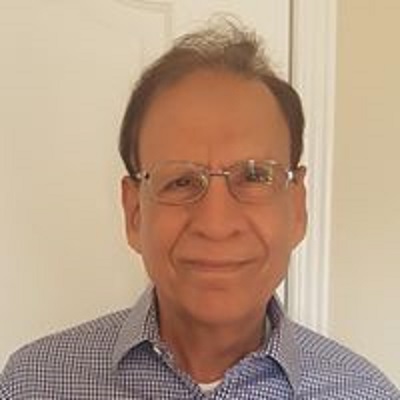
Author: Dr. Khalid Sohail
Reviewer: Habeeb Sheikh
Introduction and Overview
Dr. Khalid Sohail’s Creative Minority – Dreams and Dilemmas explores the lives, struggles, and contributions of creative individuals who challenge societal norms. The book, in its expanded second edition (2022), delves into the psychological, social, and spiritual dimensions of creativity. Dr. Sohail, a psychotherapist and prolific writer, combines clinical insights with literary analysis to present a comprehensive study of creativity across disciplines.
Chapter 1: Twelve Characteristics of Creative Personalities
Creative individuals share distinct traits:
- Sensitivity to Environment: They absorb stimuli intensely, often leading to emotional turbulence.
- Love for Solitude: Isolation fuels their introspection and innovation.
- Passion for Medium: They obsess over their chosen forms of expression (e.g., art, science).
- Struggle with Discipline: Routines feel restrictive; they thrive in unstructured environments.
- Fascination with Abstraction: They seek deeper meanings beyond tangible reality.
- Challenge Traditions: They reject dogma, paving the way for progress.
- Intense Passion: Their work is driven by relentless enthusiasm.
- Difficult Relationships: Their unconventional lifestyles strain personal bonds.
- Destruction Before Creation: They dismantle old paradigms to build anew.
- Unique Frustrations: Their visions often clash with societal expectations.
- Curiosity About Nature: They explore mysteries of existence.
- Personal Philosophy: They develop distinct worldviews guiding their work.
Chapter 2: From Creative Rain to Creative Spring
Dr. Sohail recounts his personal journey, framing creativity as a path to self-actualization. His “creative rain” symbolizes initial inspiration, which blossoms into a lifelong “spring” of productivity. He emphasizes how creativity enhances empathy, therapy, and personal fulfillment.
Chapter 3: Creative Personalities and Their Special Gifts
While all humans possess innate creativity, some exhibit extraordinary gifts. The chapter debates whether creativity is inherent or nurtured, citing theories from psychology and education. Dr. Sohail argues that societal conditioning often stifles creativity, but exceptional individuals (e.g., Einstein, Whitman) retain and amplify their gifts despite adversity.
Chapter 4: Creative Products
Creative outputs—art, literature, inventions—are likened to “children of the soul.” Marc Chagall’s analogy of artistic labor pains underscores the emotional investment in creation. The chapter highlights diverse forms, from Van Gogh’s paintings to Darwin’s theories, as extensions of the creator’s inner world.
Chapter 5: Creative Children in Traditional Families and Schools
Creative children face marginalization in rigid educational systems. Case studies of Walt Whitman and Albert Einstein reveal how schools labeled them as failures, unaware of their latent genius. Dr. Sohail advocates for nurturing environments that recognize and foster unconventional talents.
Chapter 6: Creative Students in Higher Education
Higher education’s rigid curricula often alienate creative minds. Charles Darwin’s struggles at Cambridge illustrate the tension between institutional expectations and innovative thinking. The chapter calls for academic flexibility to accommodate diverse intellectual styles.
Chapter 7: Evolution of Human Consciousness
Four traditions shape human consciousness:
- Humanist (Confucius, Lao Tzu): Focus on secular moral growth.
- Spiritual (Buddha, Mahavira): Detachment as liberation from suffering.
- Religious (Zarathustra): Divine morality and afterlife.
- Philosophical (Socrates, Aristotle): Rational inquiry into natural laws.
- The chapter traces contributions from Darwin, Freud, Marx, and Hawking, showing how creativity drives societal progress.
Chapter 8: Biographies of Creative Personalities
This extensive chapter profiles innovators across fields:
- Scientists: Hawking (cosmology), Darwin (evolution), Abdus Salam (physics).
- Philosophers: Hegel, Marx, Nietzsche.
- Writers: Anaïs Nin, Saqi Farooqi, Minto, Iqbal, Nida Fazli, Faiz.
- Revolutionaries: Che Guevara, Nelson Mandela, Frantz Fanon.
- Peacemakers: Tolstoy, MLK Jr., Abdul Ghaffar Khan, Kofi Annan.
Each biography underscores their struggles against societal resistance and their lasting legacies.
Chapter 9: Creativity and Insanity
The thin line between genius and madness is examined through Virginia Woolf and Van Gogh, whose mental illnesses fueled their art but also led to their demise. Historical perspectives, from Greek “Divine Madness” to modern art therapy, reveal how creativity and psychological turmoil intertwine.
Chapter 10: Creativity and Sexuality
Creative individuals often struggle with relationships due to their intense focus on work. Examples include:
- Mandela’s failed marriages.
- Darwin’s conflicts between faith and science.
- Iqbal’s relations with his beloved and three wives.
- Marx’s tumultuous personal life.
- The chapter explores how passion for creation overshadows personal stability.
Chapter 11: Creativity, Insanity, and Spirituality
Spiritual crises and breakthroughs mark the lives of:
- Al-Ghazali: From existential collapse to religious revival.
- Tolstoy: Rejecting fame for Christian socialism.
- Carl Jung: Visions leading to spiritual psychology.
- Sohail reflects on how creativity can emerge from existential despair.
Chapter 12: Creativity and Psychotherapy
Drawing from his clinic, Dr. Sohail details therapeutic approaches for creative patients, emphasizing art and music therapy over medication.
Several prominent Muslim scholars wrote about music therapy, including Al-Kindi, Al-Razi, Al-Farabi, and Ibn Sina (Avicenna). They explored the therapeutic effects of music on both physical and mental health, linking it to human emotions, astrological elements, and even the elements of the human body.
Chapter 13: Creative Legacy for Future Generations
The final chapter addresses societal rejection and persecution of creative personalities. The author mentions some of them, as scientist Nicolaus Copernicus and Galileo Galile, philosophers Socrates, Friedrich Hegel, Friedrich Nietzsche and Betrand Russell, artists Diane Arbus and Gustav Klimt, writers Saadat Hasan Minto and Oscar Wilde, revolutionaries and reformers Martin Luther King Jr., Mohandas Gandhi, Yitzhak Rabin, leaders Abdul Ghaffar Khan and Nelson Mandela.
An interview with Bette Davis reveals Dr. Sohail’s own creative upbringing. The book concludes with a questionnaire for readers to assess their creativity.
Conclusion
Creative Minority posits that creative individuals, though often ostracized, are humanity’s trailblazers. Dr. Sohail’s multidisciplinary approach—blending psychology, biography, and philosophy—offers a roadmap for embracing creativity in education, therapy, and society. The book is a tribute to those who dare to think differently, ensuring their ideas illuminate future generations.
Key Themes:
- Creativity as a transformative, often tumultuous journey.
- The societal tension between tradition and innovation.
- The interplay of mental health, spirituality, and artistic expression.
- Advocacy for nurturing creativity in institutions.
Recommendation: A vital read for educators, therapists, and anyone seeking to understand or unleash creative potential.
Title: Creative Minority 2nd Edition
Author: Khalid Sohail
Pages: 466
ISBN: 978-1-927874-50-9
Year: 2022
Publisher: Green Zone Publishing, Canada, 1-905-666-7253
End of Review